Since 1979
Craftsmanship

From file to image on the wall: that's our promise.

At Authentic Photo, we guide you from start to finish.
Printing is just one step — what truly matters is the result on your wall.

5 Year
warranty

Why do Photos Discolour...?

Simulation of a color photo discolored under the Influence of Light (Ultraviolet rays).

A woman surrounded by soaring red and pink flowers, their colors blooming from the left to the right of the image.

1. What is Lightfastness?

Lightfastness is the property of a dye that indicates the extent to which the dye is influenced by light (ultraviolet rays).
Some dyes undergo a chemical change under the influence of light that makes the colors lighter.


2. Photo prints and their Lightfastness

Most photos, such as those developed in chemical baths, fade after a few years. On this page we try to explain in a simple way why some prints discolor and how to prevent this.
Dyes that do not discolor are called "Lightfast".

There are several reasons why photos fade

1. Influence of UV rays

Under the influence of the UV rays present in light.
The more sun, the brighter the light, the more UV radiation. The human eye cannot see UV light.
Certain lighting also contains a portion of UV rays.

2. Temperature and Humidity

Temperature and humidity have a major influence on lightfastness.
The higher the temperature and humidity, the faster the photos will fade and the paper will yellow.

3. The Production Method of the Photos

  • A chemical development usually does not guarantee a long storage time. The reason is that the pigments created during development are not lightfast.
  • Have the photos been rinsed enough after development or are there any chemical residues left in the photographic paper ? These residues influence the color pigments.
  • Photos produced with inkjet do not suffer from the above chemical reactions, but here too there are significant differences: See facing: "The paper used."

4. The Paper used affects the Lightfastness

Some photo papers start to degrade and yellow over time.
Usually the ‘whiteners’ or ‘acids’ contained in the paper are to blame.
Whiteners are frequently used to give the paper a perfect white appearance.
These whiteners yellow over time. The whitening effect breaks down slowly – usually after one-and-a-half to two years already.
The breakdown also happens in complete darkness.

ISO standard 9706 has 200 years of Lightfastness
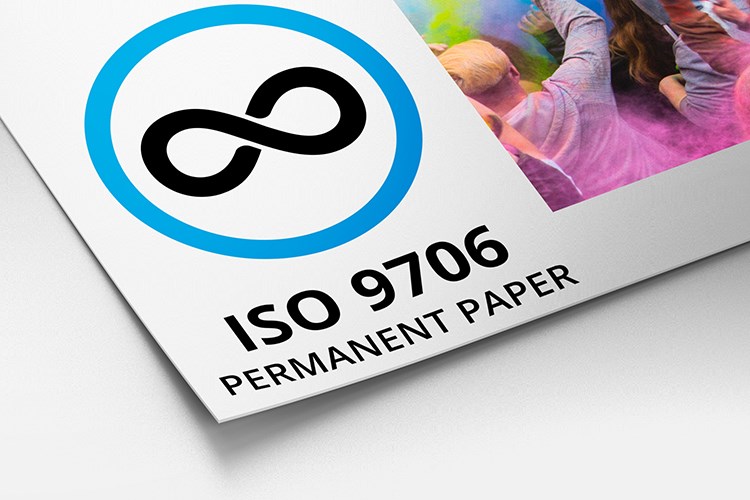
Logo ISO 9706

As a result, an ISO standard was established out of necessity (ISO 9706).

This contains specifications to which photos must conform that can be used for at least 200 years under normal everyday conditions.

This norm is considered today by most museums and galleries as the standard.

The logo is the Infinite symbol in a blue circle, accompanied by the ISO 9706 identifier.

Verification and Certification of ISO 9706 standard

We would just like to mention two companies that check and confirm that the products produced comply with the ISO 9706 standard.

On our website, and on our certificates, we refer to these companies if they have tested a product used by us.

Testing takes place in an accelerated environment: that is to say a hundred years can be simulated in a few months.

Each time we present print products on this website that have been tested by a test centre, we mention this with a reference on the certificate.

Wilhelm-research.com (USA)
Since 1978, Henri Wilhelm, the founder, has devoted himself exclusively to research into image stability.
In his lab, manufacturers of printers, inks and papers are tested for the durability of their products.
Manufacturers may mention the results obtained in their quality certificates.
www.wilhelm-research.com

LNE Paris
LNE is a more general research centre in Paris that, among other things, also examines the lightfastness of photographic products and issues certificates. 
www.LNE.fr

Fine-Art Inkjet Papers from Hahnemühle and Canson with ISO 9706 standard

Papiers repondant à la norme ISO 9706

In addition to ordinary photographic papers, producers of quality Photo Papers such as Hahnemühle and Canson sell a range of artistic Fine Art papers that meet the ISO 9706 standard. 

Authentic produces an extensive range with these papers. You can find them in ‘Diasec A la Carte’ and Photo Prints.

Elsewhere on this site they are designated by the ISO 9706 logo.

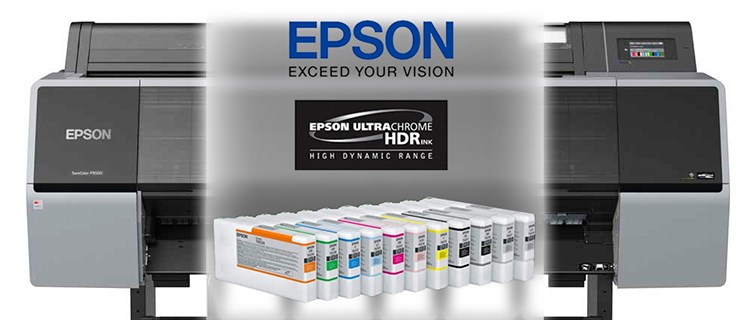
Solution : Epson ISO 9706 Inks and Compatible Printers

Les encres Epson Ultrachrome HDR répondent à la norme ISO 9706 — AuthenticPhoto.Com

Epson is a manufacturer of printers with associated inks that both comply with ISO standard 9706.

You should therefore not only use ISO 9706 papers, you should also have ISO 9706 inks and printers.

AuthenticPhoto uses such ISO 9706 Inks and Printers. 

Diasec finishing in accordance with the ISO 9706 standard

Once the photo has been produced on ISO 9706 paper, it must also be finished to the same standard.

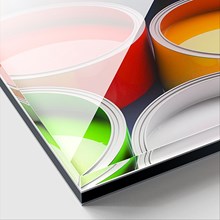
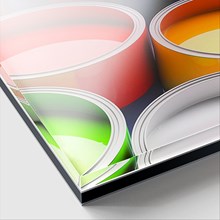
Diasec is the ideal adhesive product for the ISO 9706 standard.

That is why Diasec is adopted as an ISO 9706 standard by world-famous image artists, museums and art galleries.

For gluing and presentation, do not use any products that contradict the ISO 9706 standard. Mounting photos with an adhesive that does not respect the ISO 9706 standard, for example.

Privacy Policy

1. Identity & contact

Authentic Photo
Sint Bernardusstraat 9 & 19
1060 Brussels, Belgium
Email: ...
Phone: +32 2 542 87 78
CBE: [to be completed]

2. What data do we collect?

  • Email address — when you subscribe to our newsletter
  • Name and postal address — if you request a free discount card
  • Language preference — to communicate with you in the right language
  • Name, address and contact details — when placing an order

3. Why do we use your data?

  • Newsletter — visual inspiration, realisations and material insights (via Brevo/Sendinblue)
  • Discount card — a physical card with a unique discount code sent by post
  • Orders — production, delivery and customer service

4. Legal basis

  • Consent — for sending the newsletter (art. 6.1.a GDPR). You can withdraw your consent at any time.
  • Contractual necessity — for processing orders and sending the discount card (art. 6.1.b GDPR).

5. Sharing with third parties

We only share your data with processors strictly necessary for our services:

  • Brevo (Sendinblue) — sending emails and newsletters
  • Hosting provider — technical hosting of our website

We never sell or rent your data to third parties.

6. Retention periods

  • Newsletter — until you unsubscribe
  • Orders — 7 years (legal accounting obligation)
  • Discount card — maximum 1 year after the code expires

7. Your rights

Under the General Data Protection Regulation (GDPR), you have the right to:

  • Access your personal data
  • Rectification of inaccurate data
  • Erasure of your data
  • Data portability
  • Restriction of processing
  • Object to processing

You can exercise these rights by contacting us at ....

8. Filing a complaint

If you are not satisfied with how we handle your data, you can file a complaint with the Data Protection Authority (GBA):
Drukpersstraat 35, 1000 Brussels
www.dataprotectionauthority.be

9. Cookies

Our website uses only functional cookies necessary for the proper functioning of the site. We do not use tracking or marketing cookies.

10. Changes

We may update this privacy policy from time to time. The most recent version is always available on our website.

Last updated: March 2026